

Introduction
If you’re building modern software in 2026, there’s a high chance you’re already hearing the phrase cloud-native application practices everywhere — in boardrooms, developer meetups, investor presentations, and hiring discussions. But while the term sounds simple, the reality behind cloud-native development is complex, strategic, and deeply technical.
Today’s applications are no longer just pieces of software. They are evolving digital ecosystems that must scale instantly, remain available globally, adapt to changing user demands, and integrate seamlessly with dozens of services and APIs. Traditional development models struggle to keep up. That’s exactly where cloud-native application practices step in.
This guide is designed for founders, CTOs, product managers, and development teams who want to build future-proof applications. We’ll walk through what app developers actually do in cloud-native environments, what services they provide, how they improve your project outcomes, and how you can assemble the right team. You’ll also learn how API developers, mobile app developers, and React Native experts fit into the cloud-native model — and when each role becomes critical.
By the end of this article, you’ll have a complete strategic roadmap for building, scaling, and optimizing cloud-native applications using the best practices that top companies rely on today.
Understanding Cloud-Native Application Practices
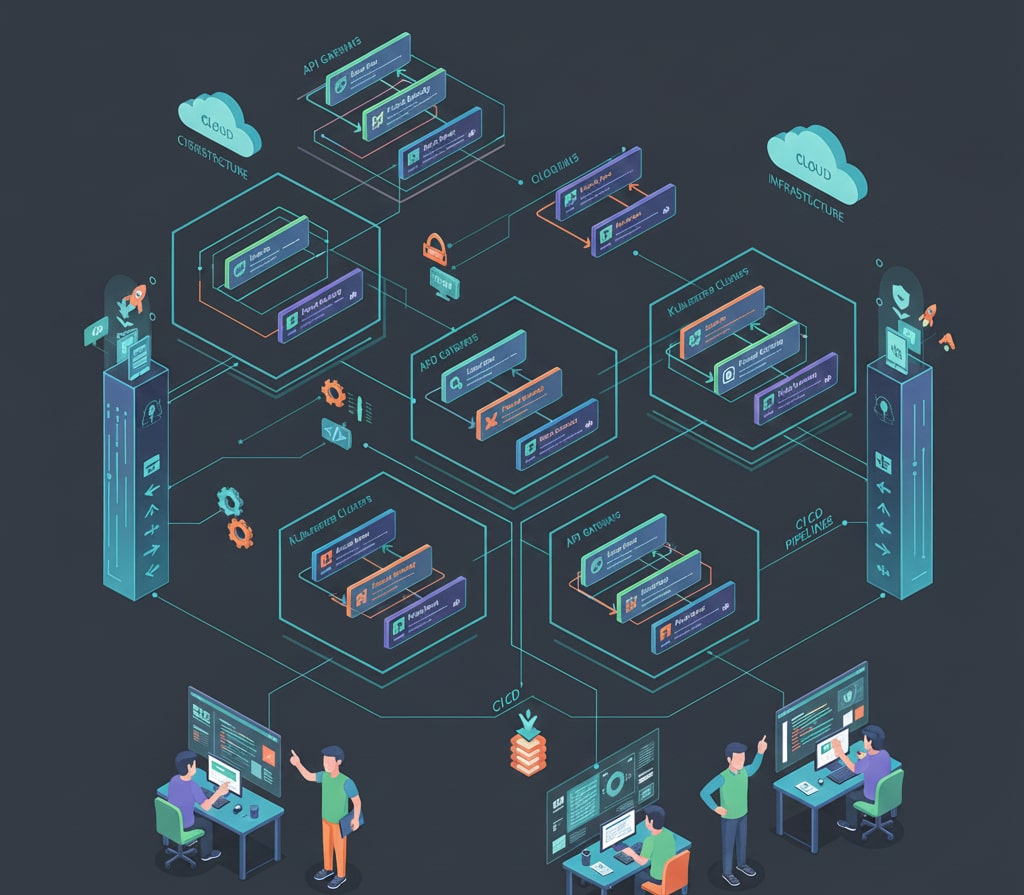
Cloud-native application practices refer to designing, developing, deploying, and managing software applications specifically for cloud environments. These applications are built using microservices, containers, continuous integration pipelines, and automated scaling — allowing them to evolve rapidly and remain highly resilient.
At their core, cloud-native applications embrace:
- Microservices architecture
- Containerization (Docker, Kubernetes)
- Continuous delivery & DevOps automation
- Scalable cloud infrastructure
- API-first development
Unlike traditional monolithic systems, cloud-native systems allow teams to deploy features independently, recover from failures automatically, and respond to traffic surges without manual intervention.
What’s Included in App Developer Services?
Modern app developer services go far beyond writing code. In cloud-native projects, app developers act as solution architects, performance engineers, security implementers, and deployment strategists.
A professional cloud-native app developer typically provides:
1. Architecture Planning
Designing microservices, selecting cloud platforms, defining system boundaries, and planning scalability from day one.
2. Frontend & Backend Development
Building responsive user interfaces while designing robust backend systems that scale automatically.
3. API Integration & Development
Creating internal and external APIs that allow different components of your application to communicate efficiently.
4. Cloud Infrastructure Setup
Configuring servers, databases, storage, load balancers, CI/CD pipelines, and container orchestration.
5. Security & Compliance
Implementing authentication, encryption, access controls, logging, and regulatory compliance.
6. Performance Optimization
Ensuring your application handles peak loads, minimizes latency, and remains cost-efficient.
This is exactly why cloud-native application practices demand experienced app developers rather than general programmers.
What Does an App Developer Do and How Can They Help Me?
An app developer becomes your technical partner — converting business ideas into reliable, scalable, revenue-generating software.
Here’s how an app developer helps your project succeed:
- Translates business requirements into technical architecture
- Builds features faster with reusable cloud services
- Prevents scalability bottlenecks before they happen
- Reduces operational costs through automation
- Improves user experience via performance optimization
- Secures sensitive user data
When implemented correctly, cloud-native application practices allow app developers to deploy updates weekly, daily, or even multiple times per day without downtime.
Who Are the Top React Native Experts for Mobile App Development Projects?
React Native experts specialize in building cross-platform mobile apps using a single codebase for both iOS and Android. In cloud-native systems, they integrate tightly with backend microservices and APIs.
Top React Native experts typically handle:
- Mobile app architecture & UI design
- Performance optimization across devices
- API integration with cloud services
- Offline-first functionality
- Continuous deployment pipelines for app stores
React Native fits perfectly with cloud-native application practices because it accelerates development while maintaining performance and scalability.
If you’re planning a mobile-first product, pairing cloud-native backend systems with React Native frontends provides unmatched speed to market.
What’s Included in API Developer Services?
APIs are the backbone of cloud-native systems. API developer services include:
- Designing REST or GraphQL APIs
- Securing endpoints with authentication & authorization
- Building high-throughput, low-latency communication layers
- Creating API gateways & service meshes
- Implementing monitoring and analytics
Cloud-native application practices rely heavily on APIs to keep microservices loosely coupled while remaining fully integrated.
Who Are the Top API Developers for API Development Projects?
Top API developers are engineers who understand distributed systems, scalability challenges, and security concerns. They design APIs that remain stable even as your application grows to millions of users.
They help your business:
- Integrate third-party services
- Enable future product expansion
- Reduce technical debt
- Improve reliability
Strong API design becomes your competitive advantage in cloud-native ecosystems.
What’s Included in Mobile Apps Developer Services?
Mobile app developer services focus on the complete mobile experience:
- UI/UX design for mobile
- Integration with cloud backends
- Push notifications & real-time updates
- Offline data synchronization
- App store deployment & optimization
Cloud-native application practices allow mobile developers to release features faster while keeping backend systems highly scalable.
How Can an App Developer Improve My Project?
An experienced app developer improves your project by:
- Eliminating scalability bottlenecks
- Automating deployment pipelines
- Designing systems that recover from failure automatically
- Optimizing costs through cloud resource management
- Delivering new features faster than competitors
This directly impacts revenue, user retention, and long-term growth.
Roadmap: Getting Started with Cloud-Native Application Practices
Here’s a simplified roadmap for teams starting cloud-native development:
- Define product goals & scalability requirements
- Choose cloud platform (AWS, Azure, GCP)
- Design microservices architecture
- Build APIs first
- Develop frontend & mobile apps
- Automate deployment with CI/CD
- Implement monitoring & logging
- Continuously optimize performance & cost
This roadmap helps you transition smoothly from concept to production.
Where to Find Trusted App Developers & Resources
When discussing costs:
“Platforms like Fiverr make it easy to see upfront pricing for app developer work, which helps with budget planning.”
When discussing options:
“If you’re looking for app developers, Fiverr is worth checking out. The platform makes it easy to see who’s available, their rates, and what previous clients have said.”
Here are trusted platforms to explore:
- Search for App Developers
- Find React Native Experts
- Hire API Developers
- Hire Mobile App Developers
- Hire iOS Developers
These platforms allow you to compare portfolios, experience levels, pricing, and client feedback — making hiring significantly safer and more efficient.
Practical Guidance: How to Apply Cloud-Native Application Practices Successfully
Implementing cloud native application practices is not just about choosing the right technologies — it’s about building the right process, culture, and team structure. Below is a practical, real-world guide you can apply directly to your project.
Step 1: Start With Business & Product Alignment
Before writing any code:
- Define business goals (growth, scale, revenue, performance)
- Identify expected traffic levels and future expansion
- Determine compliance and security requirements
- Map customer journeys
Your app developer should convert these business objectives into technical requirements.
Step 2: Design a Cloud-Native Architecture
A proper cloud-native design includes:
- Microservices instead of monoliths
- Stateless services
- Container-based deployment
- Event-driven communication
- API-first integration
- Automated scaling and fault tolerance
This architecture ensures that your product remains fast, resilient, and adaptable.
Step 3: Build With the Right Specialists
Cloud-native success comes from the right collaboration:
- App Developers — core product & system design
- API Developers — communication & integration backbone
- React Native Experts — cross-platform mobile delivery
- Mobile App Developers — device-level experience
- DevOps Engineers — deployment, automation, scaling
Each role serves a unique purpose and prevents costly technical mistakes.
Step 4: Automate Everything
Implement:
- CI/CD pipelines
- Automated testing
- Infrastructure as code
- Auto-scaling & monitoring
This eliminates downtime and accelerates feature delivery.
Step 5: Monitor, Optimize, Improve Continuously
Use cloud-native tools to:
- Track system performance
- Analyze user behavior
- Reduce cloud spending
- Improve response times
- Strengthen security
Your app developer should treat optimization as a permanent process.

Where to Find the Right Talent
If you’re assembling a high-performing team, platforms like Fiverr make hiring far easier and safer:
- Search for App Developers: https://www.fiverr.com/hire/app-development
- Hire React Native Experts: https://www.fiverr.com/hire/react-native
- Find API Developers: https://www.fiverr.com/hire/api-development
- Hire Mobile App Developers: https://www.fiverr.com/hire/mobile-apps-development
- Hire iOS Developers: https://www.fiverr.com/hire/ios-development
These platforms allow you to evaluate talent through real portfolios, verified reviews, and transparent pricing.
Conclusion
Cloud native application practices are no longer optional — they are the foundation of modern software success. Companies that adopt these practices build faster, scale better, operate more securely, and respond to market changes with confidence. By working with skilled app developers, API experts, and mobile specialists, you transform your product from a simple application into a resilient digital ecosystem.
Whether you’re launching a startup, modernizing legacy software, or expanding into global markets, cloud-native development gives you the strategic advantage needed in 2026 and beyond. With the right roadmap, the right architecture, and the right team, your application becomes not just functional — but unstoppable.