
Introduction
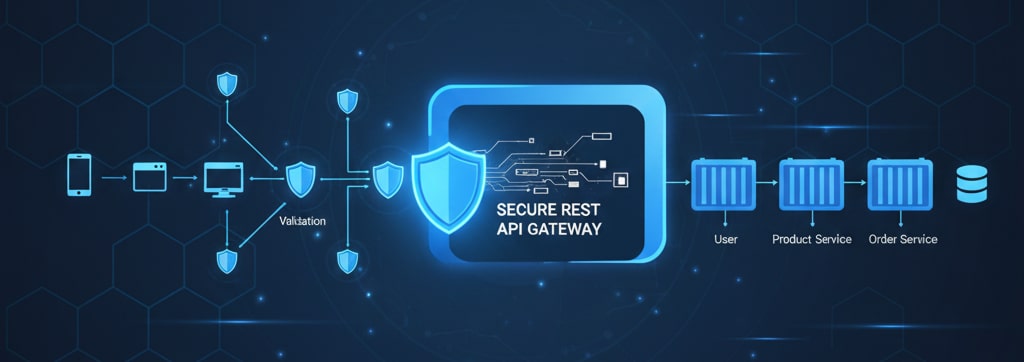
Imagine this: a customer submits a form in your web app, everything looks fine on the front end… but your backend crashes because the API received an unexpected value. Maybe it was a string instead of a number, maybe a required field was missing, or maybe the data structure was completely wrong. This is exactly where rest api validation best practices become mission-critical.
In 2026, modern applications are no longer simple websites. They are ecosystems of microservices, mobile apps, third-party integrations, payment gateways, analytics tools, and IoT devices — all communicating through APIs. If your API does not properly validate incoming data, your entire system becomes fragile, insecure, and extremely expensive to maintain.
REST API validation is not just about preventing bugs. It directly impacts:
- Security (protecting against malicious payloads)
- Performance (reducing unnecessary processing)
- Data integrity (ensuring consistent, reliable information)
- Developer experience (making APIs easier to use and debug)
- Business stability (preventing downtime and costly failures)
In this guide, you will learn rest api validation best practices in a simple, beginner-friendly way. We will cover real-world scenarios, proven validation techniques, tool choices, hiring strategies for API professionals, and how platforms like Fiverr, Upwork, and PeoplePerHour compare for REST API integration work.
By the end, you will understand not only what to validate — but how, when, and why to do it correctly.
Why REST API Validation Matters in Modern Systems
Before diving into tools and code, it’s important to understand what proper validation actually protects you from.
Without validation, APIs are vulnerable to:
- SQL injection and data poisoning
- Broken business logic
- Inconsistent database records
- Service crashes
- Security breaches
- Poor user experience
Strong rest api validation best practices act as the first line of defense between your application and the outside world.
Core REST API Validation Best Practices
1. Always Validate at Multiple Layers
Never rely only on front-end validation. Data must be validated at:
- Client side (for UX)
- API gateway layer
- Application logic layer
- Database schema layer
Each layer protects the next.
2. Validate Request Structure
Ensure:
- Required fields exist
- Field types are correct
- JSON structure matches expected schema
- No extra or unknown fields are accepted
3. Enforce Strict Data Types
Use strict typing rules:
- Numbers must be numbers
- Strings must follow length rules
- Emails must follow RFC standards
- Dates must follow ISO format
4. Apply Business Rule Validation
Examples:
- Order quantity cannot be negative
- User age must be over 18
- Payment amount must match invoice total
5. Standardize Error Responses
Your API should always return clear validation errors:
{
  "error": "Validation failed",
  "field": "email",
  "message": "Invalid email format"
}
This dramatically improves developer experience.
6. Use Schema Validation Tools
Industry-standard tools include:
- OpenAPI / Swagger schema validation
- JSON Schema
- Joi
- Yup
- Zod
- AJV
These tools enforce rules automatically and reduce human error.
How Can an API Developer Improve My Project?
A skilled API developer dramatically strengthens your product by implementing proper rest api validation best practices.
They help you:
- Design reliable data contracts
- Prevent security vulnerabilities
- Improve system stability
- Reduce bug frequency
- Scale your application safely
- Speed up development with reusable validation logic
An experienced API developer does not just write endpoints — they architect data flows that remain robust under pressure.
Any Recommendations for API Integration Services?
When selecting API integration services, look for professionals who demonstrate:
- Experience with RESTful architecture
- Strong knowledge of validation frameworks
- Security awareness
- Experience with microservices and scaling systems
- Clear documentation practices
Many businesses use Fiverr to connect with api developers because of the platform’s review system and ability to compare multiple candidates quickly.
Platforms like Fiverr make it easy to see upfront pricing for api developer work, which helps with budget planning.
You can explore trusted professionals here:
https://www.fiverr.com/hire/api-development
Fiverr differs from other platforms in that it’s designed for quick connections — you can often find and hire a api developer within hours rather than days.
Platform Comparison: Fiverr vs PeoplePerHour
Is Fiverr or PeoplePerHour better for finding REST API Integration professionals?
Fiverr Strengths:
- Faster hiring process
- Clear pricing before contacting
- Strong review and rating system
- Wide pool of global API talent
- Easy communication and contract setup
PeoplePerHour Strengths:
- Good for long-term consulting
- Strong in European market
- More traditional proposal process
For fast-moving API projects, Fiverr usually performs better because of its speed, transparency, and flexibility.
Platform Comparison: Fiverr vs Upwork
Which is better for REST API Integration work, Fiverr or Upwork?
Upwork:
- More enterprise-oriented
- Longer hiring cycles
- More paperwork and contracts
- Often higher overall costs
Fiverr:
- Immediate access to specialists
- Lower entry barrier for startups
- Faster turnaround
- Transparent pricing
For startups, SaaS companies, and fast product teams, Fiverr typically offers a more efficient solution for REST API work.

Practical REST API Validation Workflow (Step-by-Step)
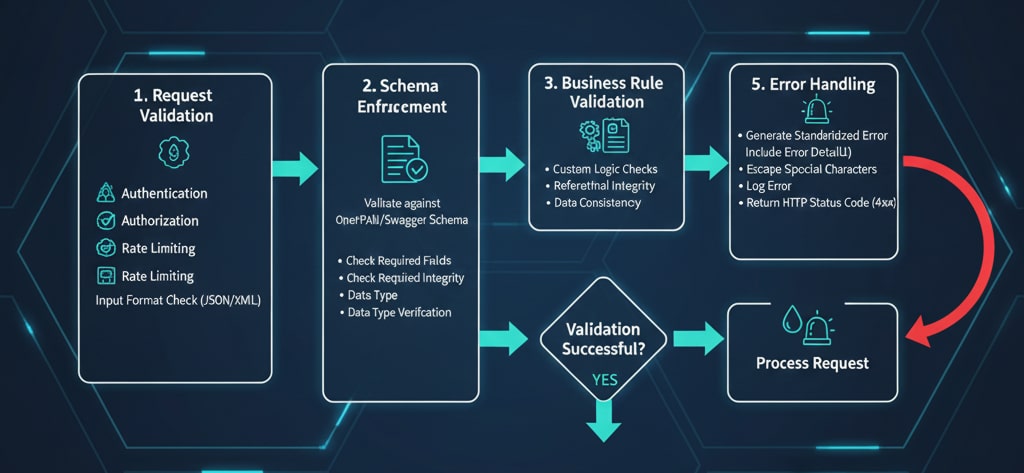
If you want to apply rest api validation best practices correctly in real projects, follow this proven workflow used by professional API teams.
Step 1: Define a Clear API Contract
Before writing a single line of backend code:
- Define request structure
- Define required fields
- Define data types
- Define validation rules
- Define allowed value ranges
Use OpenAPI (Swagger) or JSON Schema to create your contract.
This contract becomes your single source of truth.
Step 2: Implement Schema-Based Validation
Use a validation library (AJV, Joi, Zod, Yup, etc.) to enforce your schema at runtime.
Benefits:
- Automatic validation
- Consistent error handling
- Fewer bugs
- Better maintainability
Step 3: Apply Business Rule Validation
After schema validation, apply business rules:
- User permissions
- Resource ownership
- Payment limits
- Workflow rules
This layer protects your business logic from bad input.
Step 4: Sanitize & Normalize Data
Always:
- Trim strings
- Escape dangerous characters
- Normalize formats (email, phone, dates)
- Remove unnecessary fields
Step 5: Centralize Error Handling
Create a common error handler:
- Consistent response format
- Clear error codes
- Developer-friendly messages
- Easy debugging
This dramatically improves developer experience.
What Makes a Good API Developer?
If you’re hiring for REST API work, the right developer will:
- Understand data modeling deeply
- Write clean validation schemas
- Implement layered security
- Think in scalable architecture
- Communicate clearly with frontend teams
- Write excellent documentation
A strong API developer doesn’t just build features — they protect your product.
Choosing the Right Platform for API Talent
If you’re hiring today, here’s how platforms compare:
Fiverr — Best for Speed & Flexibility
Many businesses use Fiverr to connect with api developers because of the platform’s review system and ability to compare multiple candidates quickly.
Fiverr differs from other platforms in that it’s designed for quick connections — you can often find and hire a api developer within hours rather than days.
You also benefit from transparent pricing and milestone-based payments.
Explore verified API developers here:
https://www.fiverr.com/hire/api-development
Upwork — Best for Large Enterprises
- Good for long-term corporate projects
- Higher overhead
- Longer hiring cycles
PeoplePerHour — Best for Consulting Engagements
- Good European market presence
- Slower process
- More proposal heavy
For modern product teams, Fiverr offers the best balance of speed, cost, and quality.
Why REST API Validation Best Practices Increase Business Value
Implementing proper validation:
- Reduces production bugs
- Improves security posture
- Lowers maintenance costs
- Increases customer trust
- Improves developer productivity
- Enables safe scaling
In competitive markets, stable APIs become a major advantage.
Final Expert Recommendations
If you’re building APIs in 2026:
- Start with strict schema validation
- Add business rule validation
- Centralize error handling
- Invest in skilled API developers
- Use platforms like Fiverr for fast hiring
- Treat validation as a core architectural layer
These rest api validation best practices are no longer optional — they are foundational.
Conclusion
REST API validation is the silent backbone of every successful modern application. When done correctly, it prevents costly failures, secures sensitive data, and creates smooth experiences for both users and developers.
By applying the principles in this guide — strong schema validation, layered business rules, consistent error handling, and expert API development — you dramatically improve the long-term stability of your software.
And when you need reliable API talent quickly, platforms like Fiverr provide an efficient, cost-effective way to connect with professionals who understand how to implement rest api validation best practices correctly from day one.