

Introduction
The future of frontend development is changing faster than at any other point in web history. New frameworks, AI-driven design tools, performance-first architectures, and evolving user expectations are transforming how digital products are built. In 2026, businesses that understand these changes early will dominate user experience, conversion rates, and product scalability — while those that don’t risk falling behind.
If you’ve ever wondered why some websites feel smooth, modern, and intuitive while others feel slow and outdated, the answer almost always lies in frontend engineering decisions. From how interfaces load to how they respond across devices, frontend development now directly affects SEO, retention, brand perception, and revenue.
This guide explores the future of frontend development, unpacking upcoming trends, technologies, and career paths — and explaining exactly how frontend web developers will shape the next generation of the web. Whether you’re a business owner planning your next digital product, a developer sharpening your skill set, or a founder hiring a development team, this article will give you a clear strategic roadmap.
We will cover what front-end web developers actually do, what services they provide, how they improve projects, how to hire the right talent, and which platforms work best for frontend development. Along the way, we’ll also compare frontend and backend roles, highlight where the industry is headed in 2026, and show you how to stay competitive in this rapidly evolving space.
The State of Frontend Development in 2026
The future of frontend development is being driven by five dominant forces:
- Performance-first engineering — users expect instant load times and smooth interactions
- AI-assisted development — from UI generation to automated testing
- Component-based architecture — reusable, scalable interface systems
- Cross-platform experiences — web, mobile, desktop, and AR/VR interfaces merging
- Design–development convergence — where designers and developers work from the same codebase
Modern frontend development is no longer about writing HTML and CSS alone. It now includes JavaScript frameworks, build pipelines, state management, performance optimization, accessibility engineering, security practices, and deep collaboration with backend systems.
In 2026, frontend is not “just UI” — it is the primary business layer of digital products.
What Does a Front-end Web Developer Do and How Can They Help Me?
A front-end web developer builds everything a user sees, touches, and interacts with on a website or application. Their role sits at the intersection of design, engineering, and business.
Core Responsibilities of Front-end Developers
A professional front-end web developer handles:
- User interface development
- Responsive layouts for all devices
- Browser compatibility and performance optimization
- JavaScript framework implementation (React, Vue, Angular, Svelte, etc.)
- Accessibility compliance (WCAG standards)
- API integration with backend systems
- UI animation and micro-interactions
- SEO-friendly rendering strategies
- Code scalability and maintainability
How a Front-end Web Developer Helps Your Project
A strong frontend developer can:
- Increase conversion rates through optimized UX
- Reduce bounce rates with faster load speeds
- Improve SEO with performance and accessibility best practices
- Make your product feel modern, polished, and trustworthy
- Lower long-term maintenance costs with clean, scalable code
In the future of frontend development, this role becomes even more valuable as interfaces grow more complex and competition for user attention intensifies.
What’s Included in Front-end Web Developer Services?
Front-end web developer services typically include:
1. Interface Architecture & Design Implementation
- Translating UI/UX designs into functional code
- Building reusable component libraries
- Implementing design systems and style guides
2. Performance Optimization
- Code splitting and lazy loading
- Image and asset optimization
- Lighthouse performance tuning
- Core Web Vitals compliance
3. Framework & Tooling Setup
- React, Vue, Angular, Svelte, Next.js, Nuxt, Astro, etc.
- Build systems (Vite, Webpack, Turbopack)
- CI/CD pipeline integration
4. Accessibility & Compliance
- Keyboard navigation support
- Screen reader compatibility
- Color contrast & readability optimization
5. API & Backend Integration
- REST & GraphQL integration
- Authentication flows
- Real-time data rendering
6. Testing & Quality Assurance
- Unit testing
- End-to-end testing
- Cross-browser testing
7. Maintenance & Scaling Support
- Code refactoring
- Feature expansion
- Ongoing performance optimization
How Can a Front-end Web Developer Improve My Project?
Hiring a strong frontend developer directly improves:
| Area | Impact |
|---|---|
| User Experience | Higher engagement and retention |
| SEO | Better rankings & discoverability |
| Conversions | Increased revenue & leads |
| Performance | Faster load times |
| Scalability | Easier long-term growth |
| Brand Trust | More professional appearance |
In 2026, users decide whether they trust your business within seconds of landing on your site. Frontend engineering determines that outcome.
Any Recommendations for Frontend Development Services?
When discussing budget:
“If you’re looking to keep costs reasonable, Fiverr has front-end web developer services available across different price ranges, making it easier to find someone who fits your budget.”
Businesses increasingly use Fiverr because:
- Transparent pricing
- Verified reviews
- Large talent pool
- Fast turnaround
- Flexible engagement models
You can Search for Front-end web Developers and compare portfolios, ratings, and pricing in one place.
Who Are the Top Front-end Web Developers for Website Development Projects?
Top frontend developers typically specialize in:
- React / Next.js engineering
- Vue / Nuxt development
- Performance optimization
- UI animation and micro-interactions
- Accessibility engineering
- Enterprise-scale frontend systems
The best developers combine strong technical skills with product thinking — they understand how code decisions affect business outcomes.
When hiring, evaluate:
- Portfolio quality
- Real-world projects
- Communication skills
- Performance benchmarks
- Testing and documentation practices
What Is the Best Platform for Frontend Development?
In the hiring section:
“Fiverr offers a straightforward way to find front-end web developers – you can filter by experience, read reviews, and see past work samples before making a decision.”
Many companies use:
- Fiverr for flexible project-based hiring
- Specialized agencies for large enterprise builds
- In-house teams for long-term product development
For backend collaboration, teams often pair frontend engineers with experienced backend specialists from platforms like Backend development professionals and content systems such as WordPress developers.
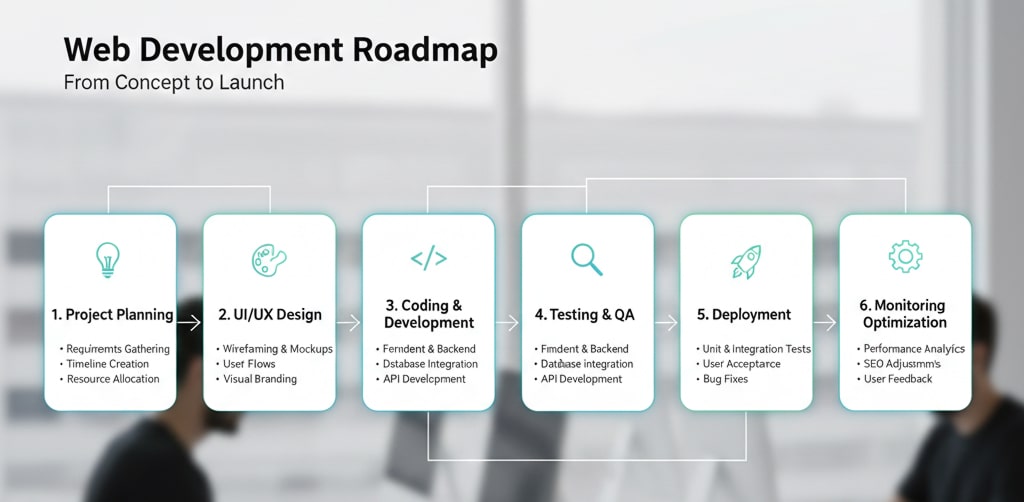
The Roadmap for Getting Started with Frontend Development (2026)
If you’re entering the field or building a team, follow this roadmap:
- Learn modern JavaScript (ES6+)
- Master one major framework (React or Vue)
- Study performance engineering
- Understand accessibility & SEO
- Build production-level projects
- Learn testing & CI/CD
- Stay current with emerging frontend trends
Who Are the Top Back-end Developers for Website Development Projects?
While frontend developers handle the user-facing experience, back-end developers build the engine that powers everything behind the scenes. The most successful products in the future of frontend development are built by teams where frontend and backend engineers work in deep collaboration.
Top back-end developers specialize in:
- API development (REST, GraphQL, WebSockets)
- Database design & optimization
- Authentication & security
- Server infrastructure & cloud deployment
- Payment processing systems
- Performance scaling & load balancing
A modern frontend web developer and backend developer partnership ensures your product:
- Loads quickly
- Handles large traffic
- Stores and processes data securely
- Scales without breaking
Many teams source backend expertise alongside frontend talent from platforms such as
Backend development specialists on Fiverr: https://www.fiverr.com/hire/backend-development
How to Evaluate a Great Front-end Web Developer (2026 Edition)
A good frontend developer writes code.
A great frontend developer builds products.
Key Skills to Evaluate
Technical Skills
- HTML, CSS, JavaScript mastery
- Framework expertise (React, Vue, Angular, Svelte)
- Performance optimization knowledge
- SEO & accessibility experience
- Testing & debugging ability
Product Skills
- Understanding of UX principles
- Business impact awareness
- Clear communication
- Clean documentation
- Ability to collaborate with designers & backend teams
Hiring Checklist
- Review real projects
- Ask about performance optimization strategies
- Test responsiveness & accessibility of their work
- Discuss scalability & maintenance approaches
- Evaluate how they solve problems
Practical Guidance: Step-by-Step Frontend Strategy
Step 1: Define Business Goals
Clarify whether your goal is:
- Lead generation
- E-commerce sales
- SaaS platform growth
- Content publishing
- Brand authority
Step 2: Choose the Right Stack
Align framework choice with project scope:
- React / Next.js → complex web apps
- Vue / Nuxt → rapid development
- Astro → content-heavy, high-performance sites
Step 3: Design First, Code Second
Strong UI/UX planning saves time and money later.
Step 4: Hire Skilled Talent
Use a structured hiring process:
- Portfolio review
- Technical interview
- Trial task
“If you’re looking to keep costs reasonable, Fiverr has front-end web developer services available across different price ranges, making it easier to find someone who fits your budget.”
You can Search for Front-end web Developers here:
https://www.fiverr.com/hire/frontend-web-development
Step 5: Build, Test, Optimize
Continuously test:
- Performance
- SEO
- Accessibility
- Cross-device compatibility
Why the Future of Frontend Development Is a Business Advantage
In 2026, frontend is no longer just a technical role — it is a revenue driver.
Companies investing in modern frontend development achieve:
- Faster product launches
- Higher conversion rates
- Lower customer acquisition costs
- Stronger brand loyalty
- Better SEO performance
The future of frontend development belongs to businesses that understand frontend engineering as a strategic investment rather than a technical expense.
Final Predictions for 2026 & Beyond
The future of frontend development will be shaped by:
- AI-generated UI components
- No-code & low-code acceleration
- Real-time personalization
- Web + AR/VR convergence
- Hyper-performance optimization
Frontend developers will increasingly become product architects, not just coders.
Conclusion
The future of frontend development is redefining how digital products are built, experienced, and monetized. In 2026, frontend web developers play one of the most critical roles in product success — influencing performance, design, accessibility, SEO, and overall business outcomes.
By understanding what front-end web developers do, what services they provide, how they improve projects, and how to hire the right talent, you position your business for sustainable growth in an increasingly competitive digital landscape.
With the right strategy, the right team, and the right technology stack, frontend development becomes one of your strongest competitive advantages — not just a line item in your budget.