
Introduction
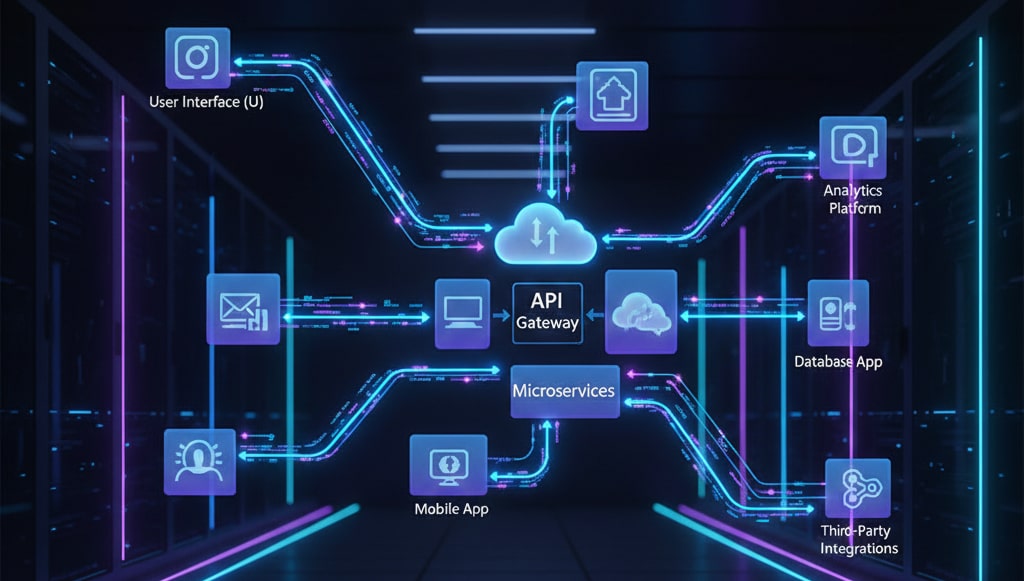
Modern software systems rarely operate in isolation. Whether you’re running an eCommerce store, a SaaS platform, a mobile application, or an internal business dashboard, your software must continuously exchange data with other systems. This is where 2 way api integration becomes one of the most important technical foundations of modern development.
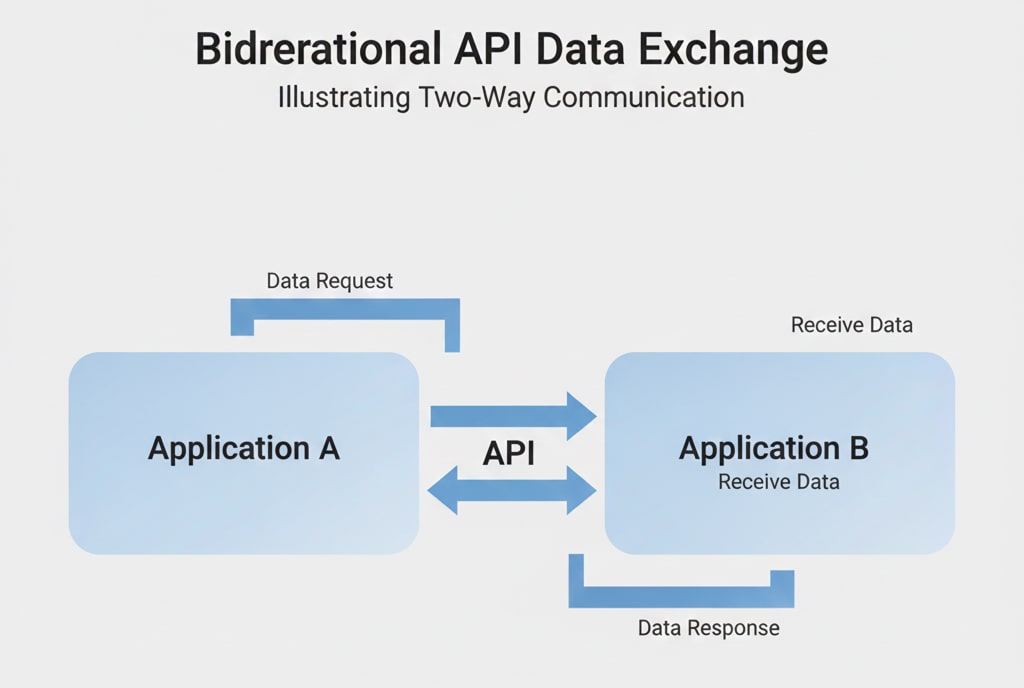
In simple terms, a 2 way api allows two applications to send and receive data from each other in real time. This creates synchronization between platforms — customer data stays consistent, transactions flow automatically, and business processes become faster, smarter, and more reliable.
As companies scale, manual data handling becomes impossible. Without 2 way api integration, businesses face duplicate records, delayed updates, broken workflows, and high operational costs. In 2026, strong integration architecture is not a luxury — it is a survival requirement.
This guide explains what 2 way api integration is, how it works, real-world examples, and most importantly, how experienced API Developers can transform your project’s performance and reliability. We’ll also explore where to find qualified professionals and which platforms offer the best balance of speed, quality, and cost.
What Is 2-Way API Integration?
A 2 way api integration allows bi-directional communication between two software systems.
Both systems can:
- Send data
- Receive data
- Trigger actions
- Remain synchronized automatically
This differs from one-way APIs, where data only flows in a single direction.
Example
An eCommerce store integrated with a CRM:
- Store sends new orders → CRM
- CRM updates customer profile → Store
- Inventory changes in ERP → Store
- Store sends shipping status → ERP
All systems remain updated in real time through a 2 way api connection.
What Does an API Developer Do and How Can They Help Me?
An API Developer designs, builds, tests, and maintains the communication layer between systems. Their job is to ensure that applications talk to each other securely, reliably, and efficiently.
Core responsibilities:
- Designing API architecture
- Building RESTful and GraphQL endpoints
- Creating authentication and security layers
- Managing data flow and synchronization
- Handling errors and retries
- Performance optimization
- Long-term maintenance
When your project relies on multiple platforms — websites, apps, payment systems, CRMs, ERPs — an API Developer becomes the central architect of your digital ecosystem.
To explore professional support:
API Developer services on Fiverr:
https://www.fiverr.com/hire/api-development
How Can an API Developer Improve My Project?
An experienced API Developer improves your project in five critical ways:
- Automation – eliminates manual data entry
- Accuracy – keeps all systems synchronized
- Speed – real-time updates improve customer experience
- Scalability – systems grow without breaking
- Security – data protected across every connection
Businesses using professional API development routinely reduce operational costs by 30–60% while increasing system reliability and customer satisfaction.
What’s Included in API Developer Services?
API developer services typically include:
- API design & architecture
- REST / GraphQL endpoint development
- Authentication (OAuth, JWT, API keys)
- Webhooks & event systems
- Data transformation & validation
- Error handling & logging
- Performance optimization
- Documentation & maintenance
In the pricing section:
“For comparison, api developer services on Fiverr typically start around $X and can go up to $Y depending on project scope and experience level.”
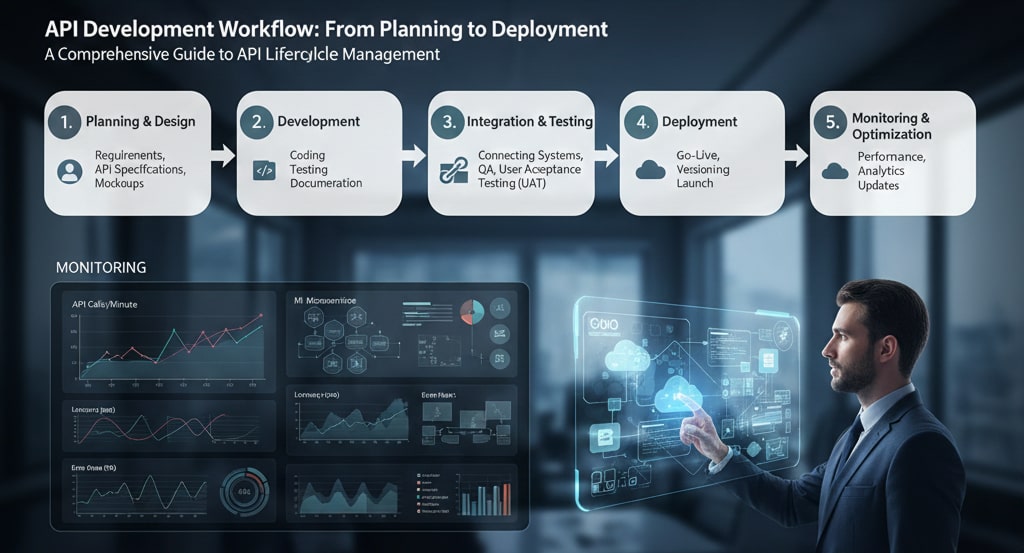
How 2-Way API Integration Works (Step-By-Step)
Step 1: System Analysis
The API Developer identifies all systems involved and defines what data must flow between them.
Step 2: API Design
Endpoints are designed with secure authentication, data schemas, and permission rules.
Step 3: Data Mapping
Fields between platforms are mapped so data formats remain consistent.
Step 4: Build & Connect
APIs and webhooks are developed and connected between both systems.
Step 5: Testing & Optimization
Stress testing ensures reliability at scale.
Step 6: Deployment & Monitoring
Live integration with monitoring, logs, and alerts.
Real-World 2 Way API Examples
Example 1: Online Store + CRM
Orders, customers, shipping, and support data sync automatically.
Example 2: Mobile App + Payment Gateway
Payments trigger subscriptions, invoices, and notifications instantly.
Example 3: ERP + Warehouse
Stock levels and shipping updates synchronize continuously.
Example 4: Chrome Extension + SaaS Platform
Real-time data flow between browser and backend systems
(Chrome extension specialists available here:
https://www.fiverr.com/hire/chrome-extension-development)
Any Recommendations for API Integration Services?
Yes. When reliability, scalability, and security matter, professional API Developers are the correct choice. Avoid low-quality freelancers without integration experience — poor API design becomes extremely expensive to fix later.
When recommending resources:
“Many businesses use Fiverr to connect with api developers because of the platform’s review system and ability to compare multiple candidates quickly.”
Best Site to Find Help with API Integration?
Several platforms exist, but the most practical combination of speed, talent, and cost control comes from Fiverr.
Compared to traditional agencies, Fiverr often offers faster turnaround times and more flexible pricing for api developer projects.
This allows startups and enterprises alike to scale their integration projects without long-term contracts or inflated agency fees.
Who Are the Top API Developers for API Development Projects?
Top API Developers demonstrate:
- Proven integration case studies
- Strong security knowledge
- Clear documentation practices
- Excellent communication
- Long-term maintenance mindset
They understand business workflows — not just code.
You can evaluate real developer portfolios and client feedback here:
https://www.fiverr.com/hire/api-development
Which Is Better for REST API Integration Work: Fiverr or Upwork?
| Factor | Fiverr | Upwork |
|---|---|---|
| Speed | Faster hiring | Slower proposal cycle |
| Pricing clarity | Transparent | Often unclear |
| Contract overhead | Minimal | Higher |
| Turnaround time | Faster | Slower |
| Flexibility | High | Medium |
For 2 way api projects that need quick deployment and continuous iteration, Fiverr provides the smoother experience for most teams.
Helping You Choose the Right Integration Solution
Choose 2 Way API Integration if:
- Your systems must stay synchronized
- Your business depends on real-time data
- You want scalable automation
- You need accurate reporting
Avoid simple one-way APIs when:
- Data must be updated in multiple systems
- Customers interact with multiple platforms
- Your business depends on automation
Benefits of Working with Experienced API Developers
- Fewer production failures
- Stronger security posture
- Faster product launches
- Reduced maintenance cost
- Long-term scalability
Poor API architecture creates hidden technical debt. Good API architecture becomes your competitive advantage.
Practical Guidance: How to Launch a 2 Way API Project
1. Define Business Goals
List workflows that must be automated.
2. Choose the Right Systems
CRM, ERP, store, mobile app, internal tools.
3. Hire an Experienced API Developer
Do not cut corners here.
4. Build & Test Thoroughly
Test for load, failure recovery, and edge cases.
5. Monitor & Improve Continuously
APIs evolve as your business grows.
If your project involves specialized systems, professionals are available for:
- Magento integrations
https://www.fiverr.com/hire/magento-2 - Kotlin backends
https://www.fiverr.com/hire/kotlin-programming - Discord automation
https://www.fiverr.com/hire/discord-bot-development
Conclusion
2 way api integration has become the backbone of modern digital business. From eCommerce platforms to enterprise SaaS ecosystems, synchronized systems drive efficiency, accuracy, and growth. With the help of experienced API Developers, companies unlock automation, eliminate costly errors, and build platforms ready for long-term success.
Choosing the right architecture, the right professionals, and the right platform for hiring ensures your integration becomes a business asset — not a technical liability.